

A New Gateway for Global Cold Chain Connectivity: Americold Port Saint John
A new import-export hub in Atlantic Canada is reshaping how temperature-controlled freight moves between global origin markets, Canada, and the United States—reducing complexity, accelerating speed to market, and protecting product integrity from arrival to distribution.
Why Cold Chain Design Matters More Than Ever
The global food supply chain has never been more complex or more exposed to disruption. Shippers moving temperature-sensitive goods across borders face challenges that compound at every handoff.
Moving these goods today requires tight coordination between ports, inland transportation, inspections, and storage – all while meeting rising expectations for freshness, speed, and cost efficiency.
In traditional models, each transition point introduces delay and variability, making consistency difficult to achieve at scale. For global shippers, particularly those moving between Europe and Canada, traditional entry points can add unnecessary distance, congestion, and cost.
What the industry needs is a smarter entry point into North America, one designed for modern temperature-controlled logistics.
The Gateway: How Port Saint John Changes the Equation
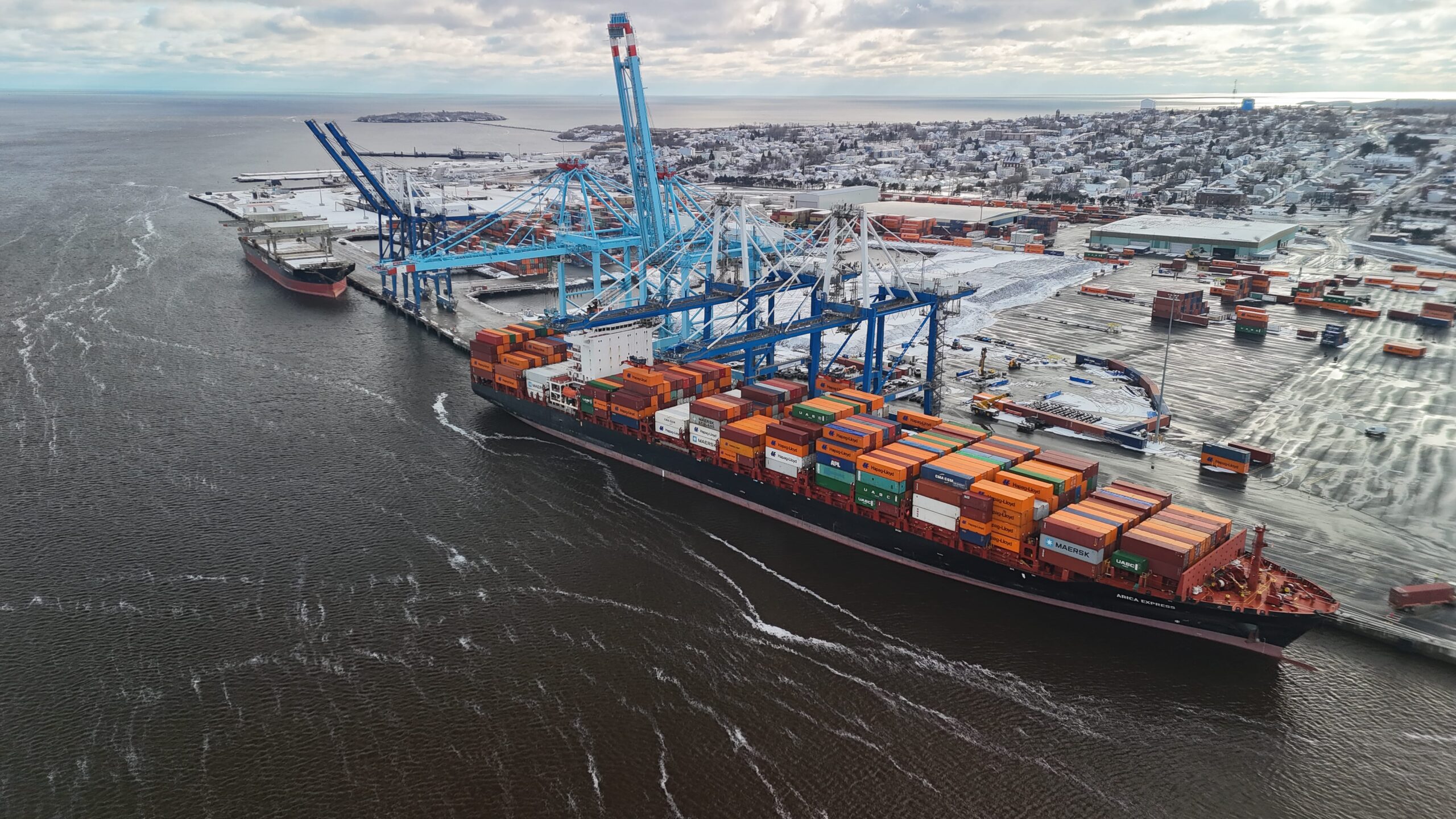
Tucked along the Bay of Fundy in New Brunswick, Canada, Port Saint John has emerged as one of the fastest-growing container ports on the Atlantic seaboard positioned as a gateway for transatlantic trade and an efficient entry point into Canada and the broader North American market.
Just 68 miles from the U.S. border, the port enables efficient access to the Northeast while avoiding the congestion common at larger East Coast hubs.
For transatlantic shipments, its location provides more direct access from Europe into Eastern Canada, avoiding congestion, dwell time, and inland backtracking often required through larger U.S. ports.
The port’s advantages include:
- Direct access to Canadian population centers and U.S. Northeast markets via efficient rail and overland routes
- Lower congestion, enabling faster vessel and truck turnaround
- Global connectivity to 350+ destinations
- Competitive drayage and operating costs
- Ongoing infrastructure investment
- More direct routing for Europe–Canada trade
For shippers, the impact is immediate: shorter lead times, lower landed costs, and greater predictability from arrival.
The Solution: Americold’s Integrated Cold Chain Hub
Port access alone is not enough to deliver cold chain performance. What differentiates Port Saint John is how Americold has integrated temperature-controlled infrastructure directly into the port and connected it to inland distribution through CPKC’s rail network.
Americold’s on-port facility is the only drayage-free temperature-controlled storage solution directly connected to a port in Eastern Canada, eliminating unnecessary handling between vessel and warehouse.
This model gives customers a more controlled and efficient path into North America.
Customers benefit from:
- On-port temperature-controlled storage, preserving product integrity from vessel to warehouse
- Direct connection to CPKC’s refrigerated rail network, enabling seamless distribution across Canada and into U.S. markets
- Onsite CFIA inspection services, eliminating off-port delays
- Efficient transloading aligned to CPKC’s single-line network
- Consolidation and deconsolidation capabilities
By combining port proximity, inspection readiness, and single-line rail connectivity, Americold reduces touchpoints, minimizes delays, and maintains tighter control over product conditions.
Designed for Import–Export Performance
For global shippers, the Port Saint John hub extends Americold’s import-export strategy, connecting ocean freight, storage, compliance, and inland transportation into one coordinated system.
This is particularly valuable for Europe–Canada trade, where a more direct, port-integrated entry point reduces transit time and complexity.
Shippers benefit from:
- Reduced demurrage and detention costs
- Fewer handling points
- Faster deployment into inland networks
- Greater end-to-end visibility
A Smarter Entry Point to North America and Beyond
Temperature-sensitive supply chains are under increasing pressure but also present an opportunity to operate differently.
Americold’s Port Saint John hub represents a more deliberate approach to cold chain design – one that simplifies operations, reduces cost, and improves reliability from the moment cargo arrives.
Together with CPKC, this model creates a more predictable pathway from global origin markets into Canada—and across North America.
Americold’s mission is to create a more connected and efficient cold supply chain. At Port Saint John, that mission is operational—giving customers a smarter way to connect global markets with Canada and move through North America with confidence.